
The New American Housing Crisis? Part 1
Why a buyer's market still feels unaffordable.
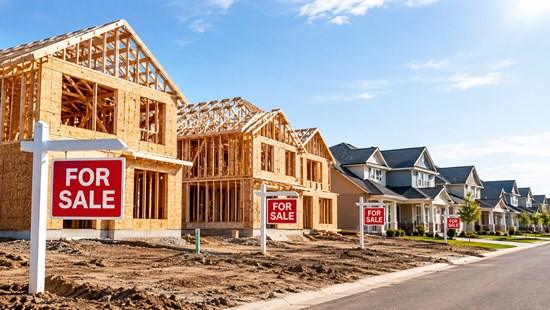
Buyers can gain negotiating power while homes remain difficult to afford. Mortgage lock-in limits turnover, many owners can wait rather than sell, and the homes available do not always match buyers' budgets or locations. Builders can offer relief through price reductions and financing incentives, but weak sales can also discourage future construction. The result is a market that can become slower without becoming affordable.
A home can sit on the market for months, receive a price reduction, and still be beyond the reach of the family who wants to buy it. That is the uncomfortable place much of American housing occupies today.
Buyers hear that the market is turning in their favor. Sellers hear that prices remain high. Both can be true. A buyer may have more homes to choose from and more room to negotiate, yet still face a monthly payment that bears little resemblance to what a neighbor pays on a mortgage obtained a few years earlier.
I think that disconnect deserves a closer look. Calling this a housing crisis does not require predicting another 2008. A market can fail people through prolonged unaffordability and limited mobility, even without a nationwide collapse in prices. This three-part series looks at why the market feels stuck, who can still get through the door, and what would have to change for today's slowdown to become a more serious downturn.
This first post examines the mechanics behind that problem. Part 2 looks at who can still get through the door, how public policy affects the outcome, and what meaningful improvement would require.
This feels personal to me, too. I have four children. Three have purchased homes, and one is still in college, already nervous about whether homeownership will be affordable. The three who own homes share a similar frustration: before the COVID-era price run-up, they expected to be able to afford a larger home than the one they ultimately purchased. They got into the market, but their housing dollars did not go nearly as far as they had expected.
More listings do not automatically mean affordable homes
Redfin estimated that sellers outnumbered buyers nationally by 58% in August 2026, its largest recorded gap in a series beginning in 2013. Its Phoenix estimate was even more pronounced, with about 95% more sellers than buyers. These are seasonally adjusted estimates, not a literal count of everyone who would like to own a home. Redfin uses active listings to estimate sellers and combines transaction data with proprietary buyer timing information to estimate buyers.
That distinction matters. A household can want a house very badly and still be absent from effective demand because it cannot qualify for the loan or assemble the cash needed to close. Wanting to buy and being able to buy are different things.
Nor does a national imbalance tell us whether the right homes are available in the right neighborhoods at the right prices. An abundance of expensive listings does little for someone searching for a modest home near work. Inventory on the edge of a metropolitan area does not fully substitute for housing near an established employment center.
Prices also adjust through more than the number displayed on a listing. A seller might contribute toward closing costs, pay for repairs, or help fund a mortgage-rate buydown. A listing might expire without a sale. Those responses can improve a buyer's position or reduce market activity before they produce a large decline in recorded sale prices.
For someone who already qualifies, a softer market can create opportunity. For someone whose budget remains far below the asking prices, the opportunity may still be theoretical.
Homeowners can often choose to wait
Many discussions of housing treat every seller as if that person must sell. In reality, an owner may prefer moving but have the option to stay.
The Census Bureau reported that 39.4% of owner-occupied homes were mortgage-free in its 2020–2024 American Community Survey five-year estimates, released in January 2026. That is nearly four in ten, although the share varies substantially by location.
A paid-off home still costs money. Taxes, insurance, utilities, repairs, and maintenance continue. Some owners face financial pressure or major life changes. Nevertheless, an owner without a mortgage may have more room to reject an offer, withdraw a listing, or postpone a move than a seller who must make a transaction happen immediately.
Owners with mortgages face a different reason to stay. The unusually low rates available during the pandemic created a financial benefit that usually does not move with them to the next house.
A family can dislike its commute, need another bedroom, or want to downsize, yet find that moving makes its monthly budget worse. The existing house then becomes a compromise that is financially difficult to abandon.
The mortgage that keeps a household in place
Consider an illustrative $350,000 mortgage amortized over 30 years. This comparison holds the loan amount and repayment term constant to show the effect of the rate alone.
The difference is roughly $853 monthly, before taxes, insurance, or other housing costs. An actual move could involve a different balance, a different remaining term, selling expenses, or a larger down payment. Even so, it explains why a household can look at a potential move and decide that staying is the only comfortable option.
Economists call this mortgage-rate lock-in. FHFA researchers estimated that each percentage point by which market mortgage rates exceeded a borrower's origination rate reduced the probability of sale by about 18.1%. The agency's original March 2024 summary estimated 1.33 million prevented sales from the second quarter of 2022 through the fourth quarter of 2023. Those are research estimates for that period, rather than a current count of missing listings.
The same research found that restricted supply supported prices enough to outweigh the direct downward price effect of higher rates in its analysis. That does not mean raising rates always raises home prices. It means the supply response can partly counteract the usual effect of more expensive borrowing.
There is another wrinkle. Many homeowners who sell also buy. Unlocking those households would add listings and prospective buyers together. Lower mortgage rates could restore movement without producing a one-for-one increase in housing available to first-time buyers.
The benefit of better turnover is real, but turnover alone does not create additional places to live.
A national shortage can coexist with local oversupply
Freddie Mac estimated a national housing shortage of 3.7 million units using data through the third quarter of 2024. The estimate depends on assumptions about household formation and the housing stock needed for a functioning market. It is a useful indication of accumulated undersupply, rather than a precise count of houses that should be built tomorrow.
At first glance, that may sound inconsistent with rising listings. It is not. A structural shortage measures the housing stock relative to longer-term needs. Listings describe the portion of that stock offered for sale at a particular time. A market can have too few reasonably priced homes overall while many of its available homes remain unsold because financing is expensive.
Housing is also local. New construction, job growth, migration, household incomes, and the age of the existing stock differ across communities. The same mortgage rate can produce very different outcomes depending on those conditions.
Within the Phoenix area, an older neighborhood with little room for additional construction presents a different supply picture from a subdivision surrounded by developable land. Buyers may consider both, but schools, commute time, lot size, and housing style limit how interchangeable they are.
Builders have stronger reasons to make a deal
A homeowner can sometimes postpone a move. A builder has money committed to land, construction, carrying costs, and a development pipeline. Completed homes that remain unsold tie up capital that could support the next project.
NAHB's September 2026 survey found that 38% of builders reported cutting prices, with an average reduction of 6% among those doing so. It also found that 66% reported using sales incentives. Those percentages describe surveyed builders, rather than the share of all newly built homes receiving a discount.
The incentives matter because many buyers shop by monthly payment. A lower mortgage rate, even when funded indirectly through the transaction, can make a home feel more attainable than a modest reduction in the contract price.
However, financing offers require careful comparison. A temporary buydown reduces payments for an initial period, after which they increase under the loan's terms. A permanent buydown reduces the note rate over the loan term. An adjustable-rate mortgage is another arrangement entirely. The advertised starting payment does not tell a buyer everything needed to evaluate the obligation.
For an existing homeowner trying to sell nearby, these offers create competition. A resale home may have a better location, larger lot, or more established landscaping, but its seller may not be able to match a builder's financing package. The buyer must compare the total transaction rather than the headline prices alone.
When a new house costs less than an existing house
A national comparison showing a lower median price for new homes can sound startling. It does not necessarily mean an equivalent new home is cheaper than an equivalent resale home.
Medians describe the middle transaction in two different groups. Builders can change the mix of homes sold by offering smaller floor plans, fewer options, smaller lots, attached products, or homes in less expensive locations. Existing-home sales include a different mix of neighborhoods, lot sizes, ages, and amenities.
Imagine a new 1,500-square-foot house on a small lot at the edge of town and an older 2,100-square-foot house on a larger lot near major employers. The new home may have the lower price. That does not establish a discount for newness. It establishes that the two purchases offer different bundles of housing and location.
The useful question is whether a buyer can obtain a suitable home at a sustainable total cost. A smaller new home may answer that question well. For another household, the extra driving and different location may make the apparent savings less attractive.
Builders can reduce tomorrow's supply
Builders are not compelled to keep starting homes indefinitely. They can finish the houses already under construction while delaying additional phases or changing future products.
That creates a difficult feedback loop. Weak demand encourages discounts on current inventory. If those discounts make new projects unattractive, future construction can slow. The immediate market becomes easier for some buyers, but the longer-term shortage may become harder to solve.
This is one reason a price correction and a lasting improvement in affordability are different outcomes. A recession could weaken demand and reduce prices, but also cost households jobs and deter construction. A lower purchase price does little for someone whose employment has become uncertain.
A healthier adjustment would allow incomes, prices, financing costs, and construction to move toward a more workable balance without relying on widespread financial distress. That is possible, but it is slower and less dramatic than the crash-or-boom predictions that dominate housing conversations.
What I would watch in the Phoenix market
For a local assessment, I would look beyond the median sale price. Active listings, pending sales, closed sales, marketing time, price reductions, and concessions help explain whether buyers are actually gaining ground.
I would also separate the relevant price ranges and property types. A shift among higher-priced sales can move a median even when the values of modest houses change little. New construction incentives may exert substantial pressure in one subdivision and have less influence in an established neighborhood several miles away.
From an appraisal perspective, concessions require analysis of market reaction. A credit does not automatically justify deducting the same dollar amount from a comparable's sale price. The question is how the financing or concession affected the transaction relative to typical market terms.
For buyers, the practical lesson is to compare price, financing, location, condition, and recurring expenses together. For sellers, it is to recognize that the competition includes the terms offered on other homes, not merely their asking prices.
The housing market can become more negotiable while remaining unaffordable. Owners have reasons to stay, buyers face limits on what they can pay, and builders must decide whether future construction still makes financial sense. That explains much of the market's sluggishness. It also leads to a harder question: when access remains limited, which households manage to buy anyway?
Sources for Part 1
- Redfin, “It's Now The Strongest Buyer's Market on Record,” September 10, 2026. August estimates and methodology.
- U.S. Census Bureau, “Nearly 40% of U.S. Homeowners Did Not Have a Mortgage in 2024,” January 29, 2026. ACS five-year estimates for 2020–2024.
- FHFA Working Paper 24-03, “The Lock-In Effect of Rising Mortgage Rates,” March 18, 2024. Figures use the original agency summary; later revisions use longer periods and different estimates.
- Freddie Mac, “Housing Supply Still Undersupplied by Millions of Units,” November 26, 2024. Estimate through Q3 2024.
- NAHB, “Builder Sentiment Falls on Higher Interest Rates and Costs,” September 2026.
Need a property-specific perspective?
A broad housing trend is a starting point. An appraisal examines the evidence relevant to the particular property and intended use.
Request an appraisal →Join the conversation
Comments are moderated before they appear. Your name will be displayed; your email address will remain private.
Hey Eric, great article. Thanks for publishing this article; it hits close to home. Are buyers gaining enough negotiating power to make a meaningful difference, or are prices and mortgage payments still keeping too many people on the sidelines?
Thanks, James. As of now, the answer is no. While the market has moved slightly into buyer's market territory, it is not a significant enough move to get buyers off the sidelines. The higher mortgage rate is not helping either. However, the higher rate may help in getting sellers to start lowering prices or increasing concessions; I'm just not quite seeing it yet. Thanks for asking.